
How to raise strong children | Fostering Resilience in Children
- neyhakhurana
- May 11, 2020
- 5 min read
“In the depths of winter, I finally learned that within me there lay an invincible summer” Albert Camus
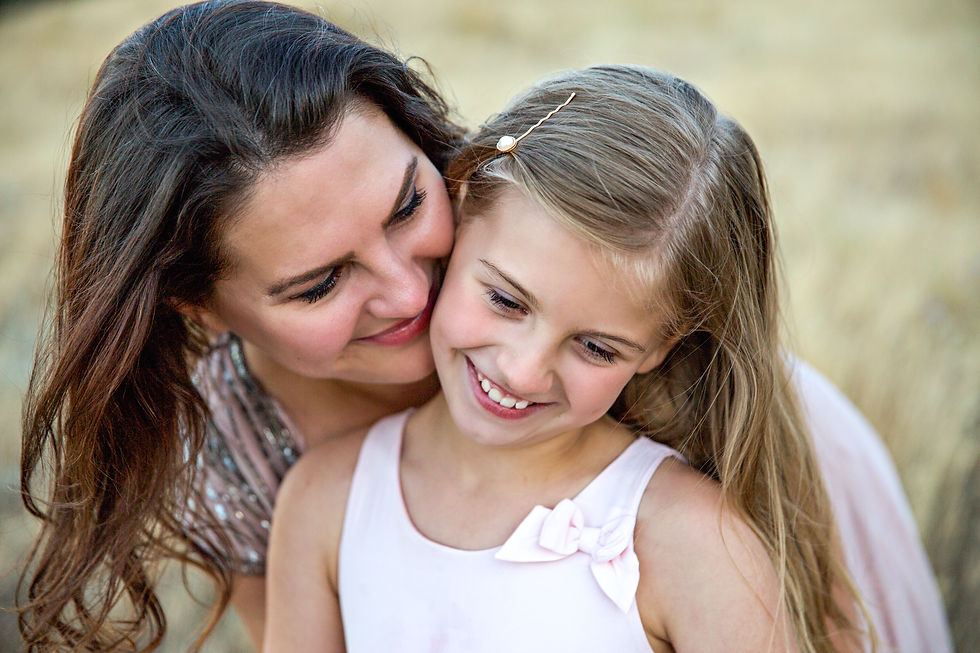
We often find ourselves talking about stress, anxiety and adversity and how it is omnipresent. Though adult life is commonly associated with the above and is much talked about, we often tend to ignore the stress and anxiety which children face.
As parents we idealize our children to be happy, healthy and carefree. There is no harm in protecting children from adversity but at the same time we do want them to be prepared to face the real world. They are bound to face emotional hurts and traumas as a part of growing up. Uncertainties ranging from adjusting to a new school, bullying, school friends to parents’ divorce and even death of a loved ones, it does take a toll on the emotional and mental well being of our children.
What is that one gift that can equip our children to deal with and thrive in the face of challenging situations?
It is Resilience.
Resilience is the strength and speed of our response to adversity- and we can build it. It isn’t about having a backbone. It’s about strengthening the muscles around our backbone. *
Being resilient does not imply that one does not get injured but that one has the ability to bounce back when life throws a curve-ball. Feeling sad, distressed and worried are natural emotions and children will experience them every now and them. Resilience gives them the tools and ways to cope and manage these emotions and adapt and move on.
How to build Resilience
The good thing about resilience is that it can be built and strengthened over time. Building resilience in children equips them with the necessary tools required to deal with grief, uncertainty and stress which they are bound to face once they enter youth.
Sheryl Sandberg, author of the book ‘Option B’ talks about ways to build resilience in children.
Control over their lives
Let them learn from failures
Let them know they matter
Help them rely on their real strengths
Sheryl shares how she used these tools to help her children deal with grief when she lost her husband and they a father.
Give children control
When children feel that they are in control of their lives they are better at dealing with the ups and downs. Being in control implies that one has the power to make changes in one’s life. It has two sides to it. Some situations demand to be acted on and be changed for better, while others require acceptance. Parents can encourage children to work at improving a stressful situation into a favorable one and to accept those situations that can not be changed.
For example, if a child is being bullied by a friend, he must be encouraged to take steps to deal with it by either staying away from the bully or letting the teachers know about it. Acting on the situation and changing it for better.
A child participates in a musical at school and makes it to the final stages of selection. But doesn’t make it to the final act. This situation requires acceptance and the child should be encouraged to look at the positive side of being able to make it till the end.
Let them learn from failure
Parents have an instinct for helping their children. We want to protect our child right from the time he is born. However, falling and failing are essentials to build resilience. When children are allowed to make mistakes, they acquire coping strategies and critical reasoning abilities. Coping gives them the confidence that they can navigate their way through life’s difficult times.
Needless to say, that children need love and acceptance when they make mistakes. Its about giving them a chance to get up on their own after a fall and letting them know that they are loved and cared unconditionally.
For instance, when a child gets into a fight with his friends, give him a chance to resolve it. When adults don’t give children the opportunity to handle difficult situations, the child is affected in two ways. First the child is not able to develop critical thinking skills like emotional control, empathy, communication etc. Second, he does not feel confident in his abilities to deal with problems.
Next time your child gets stuck or seek your help, ask her questions and gently nudge her towards the solution. Carol Dweck a famous psychologist talks about her research on school children where she mentions that children who are appreciated for the effort, they take to do their tasks, succeed more than those who are simply praised for the end result.
So, replace a simple “Good job” with “I liked it that you tried really hard” each time your child creates a masterpiece work.
Let them know they matter
Children thrive when they know they are cared for; their ideas matter and they can rely on people. When children experience connection with parents, peers, school, community, they develop the strength and confidence to handle stress and trauma. Many times, kids need the validation, attention and care of their parents and teachers for feeling mattered.
Sheryl Sandberg in her best-selling book “Option B” describes a ritual followed at schools in Denmark called as the Klassen Time. Each week at school an hour is dedicated to Klassen Time where students share their problems and discuss it with their peers to find the solution. This has two positive outcomes. On one hand the students develop empathy towards other classmates, on the other hand they feel heard and mattered.
Help them rely on their real strengths
When children identify their strengths and work at building and sharing it with others, they feel powerful to bounce back from grief. Children especially need to feel powerful after they have experienced trauma. Strengths are not just talents like music, dance etc. but also character strengths. It can be tricky to find out what your child’s real strengths are. Some important questions to discover this are, – is the child good at it?- Does he do it often and gets energized after doing it?. Helping children find their strengths would boost their confidence which in turn help them face tough times.
Teachers and Parents can help children in exploring different talent areas based on the above. Psychologist Carol Dweck asserts the role of teachers in motivating children by instilling faith in their strengths. It has been well researched that if teachers adopt a growth mindset and views each child with boundless capability to achieve, it can actually help students to believe in their capabilities and learn from failures.
It is worth noting that children model parents. A parent who displays resilience is much more likely to foster the same in his children.
In today’s VUCA world it is even more imperative to build resilience in our children.


Comments