
8 ways to make your child a healthy eater for life
- neyhakhurana
- Mar 25, 2015
- 3 min read
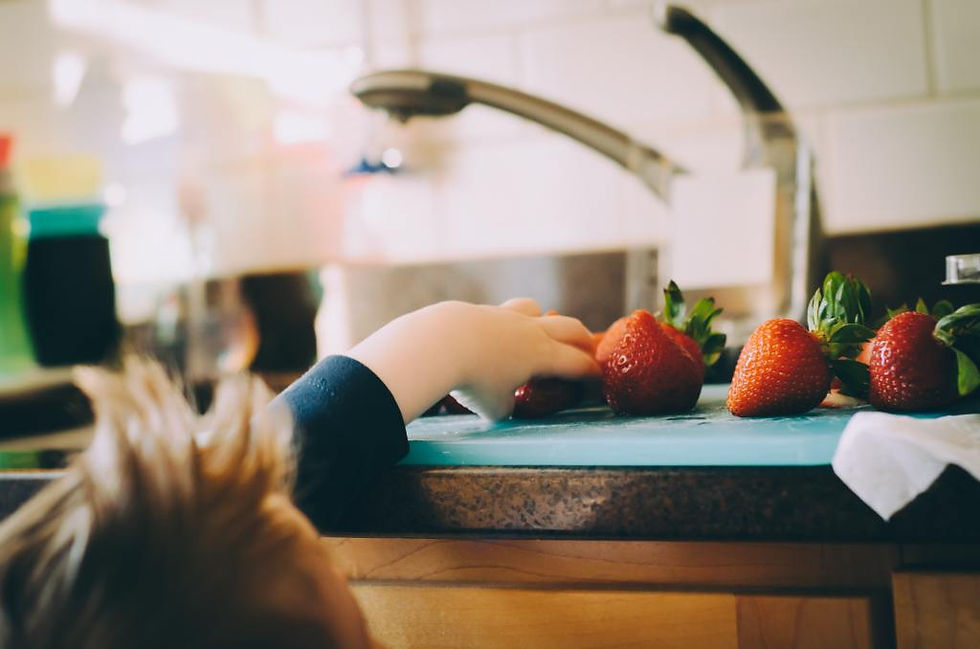
Do you have an unpleasant time during your child’s meal time? Do you constantly find yourself worried about whether your child is eating enough? Do u need to run behind your little one to finish his meals ? Are you forced to serve the same type of food to your child most of the days.
If the answer to any of the above questions is true then you are not alone. A child who is picky or fussy in his eating habits is a common thing. Little children often find it very difficult to try new types of food.
The evolutionary explanation of picky eating behavior
Children are genetically programmed to not try unfamiliar food because it might be poisonous. Over a period of time when they become familiar with a particular type of food they will be more than willing to accept it. It is also observed that little children have an innate desire to play and touch the food, which is their way of making sure that the food is not poisonous or harmful.
How to make your child like nutritious food
You decide what and your child decides how much
This should be the thumb rule and should be the fundamental principle you should follow while developing healthy eating habits in your child. Offer different types of healthy food to your child but don’t force him to clear his plate or finish that last bite. Let him decide the quantity of healthy food that you serve. On one hand this will make the child feel in control and on the other hand will enable him to be conscious of his appetite. Many studies reveal that overeating is linked to teenage obesity. Helping a child learn where to stop eating is be a great virtue to posses and will benefit him in the long-term.
2. Set a routine and stick to it
Children are creatures of routine . They thrive when they have a set routine. Like we set a sleep routine that we stick to 7 days a week. for more read. Similarly when children have a set routine in terms of meal timings. A child needs three main meals and two snack breaks in between. But this can be modified depending on each child. Some children need big meals while others enjoy small snacks through the day. The main idea is to follow a fixed routine.
3. Gradually introduce new foods
Children are often seen playing with food. Touching , mashing and playing are their ways to make sure that the food is fit for consumption. Playing with food is an instinctive desire innate in children. So whenever you introduce a new food , let your child touch , play and experiment with it. Let him make food his friend. It is also possible that the child will not eat a new food the first few times you serve it. But don’t stop serving it . Slowly the child will develop a taste and liking for it. The key is to never is to never force a child to eat something that he doesn’t want to. If forced to eat something against a child’s wish will guarantee just one thing in the long run , dislike for that particular food for life.
4. Involve your child
Make your child a part of vegetable shopping trips to the supermarket or growing vegetables in your kitchen garden. A child who is involved in these type of activities is definitely going to be more enthusiastic at the time of eating. Involve the child in meal planning or cooking or laying the table. Be imaginative and design age appropriate activities . A 4-year-old will happily assist you in cutting banana into pieces with a help of a butter knife. And a two-year old will help you find all the green vegetables in the supermarket.
5. Serve healthy
A child will eventually grow up to eat what is served to him. If you serve vegetables and fruits at your home, sooner or later the child will learn to eat those. This also means that a parent is the best example for the child. You cant expect your child to eat carrots when you are eating chips . Create an environment where the child sees that healthy eating is a way of life and you will gift him a lifetime of healthy eating habits.
6. Seek advice
If you feel that your child’s eating habits are interfering with his regular activities then it is best to seek advice from a specialist . A doctor can guide you through it and there should be no embarrassment in doing the same. Poor eating habits if continued for a long time can erode your child self-esteem.


Comments